In modern braking systems, small components often play a critical role in performance, safety, and comfort. One such component is the caliper shim—a thin yet highly engineered layer positioned between the brake pad and caliper.
This comprehensive guide explains everything you need to know—from how caliper shims work to their types, functions, and best practices—while helping engineers, buyers, and automotive professionals make informed decisions.
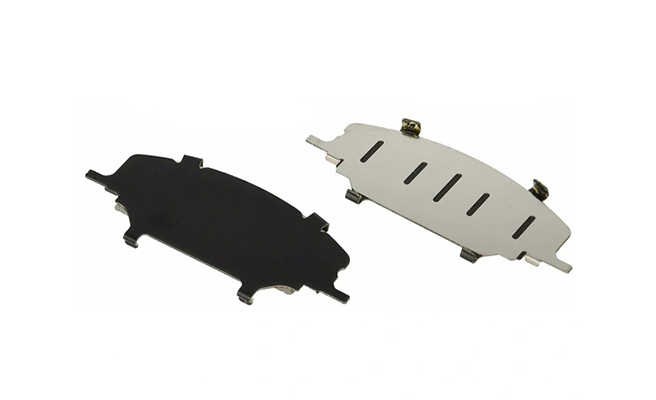
Caliper shims are thin layers of material (typically rubber, metal, or composite) installed between the brake pad backing plate and the caliper piston or housing.
Their primary role is to act as a buffer and stabilizer within the braking system.
According to industry sources, brake shims:
Reduce vibration and noise
Improve braking smoothness
Enhance component longevity
In essence, they function like precision spacers—filling micro-gaps and optimizing contact between components.
When brakes are applied, friction between the brake pad and rotor generates:
Heat
Vibrations
Acoustic noise
Caliper shims work by interrupting vibration transmission pathways.
Vibration Isolation
Shims absorb and dampen high-frequency vibrations before they become audible noise.
Elastic Buffering
Rubber or composite layers deform slightly, reducing harsh contact between metal components.
Thermal Barrier
Some shims (e.g., multi-layer or titanium) reduce heat transfer to the caliper piston
Contact Optimization
They help ensure even pressure distribution across the brake pad surface.
Caliper shims are multifunctional components that directly impact brake system performance.
| Function | Description | Impact |
|---|---|---|
| Noise Reduction | Dampens vibration-induced squeal | Improved driving comfort |
| Vibration Control | Absorbs micro-movements between pad and caliper | Stable braking |
| Heat Insulation | Reduces heat transfer to hydraulic components | Prevents brake fade |
| Alignment Correction | Ensures proper pad positioning | Even wear |
| Wear Reduction | Minimizes uneven stress distribution | Longer lifespan |
These functions collectively enhance NVH performance (Noise, Vibration, Harshness)—a critical metric in automotive engineering
Understanding shim types is essential for selecting the right solution.
Made from elastomers or synthetic rubber
Excellent vibration damping
Cost-effective and widely used
Strong and durable
Better heat resistance
Often used in heavy-duty applications
Combination of rubber + steel + adhesive layers
Superior NVH control
Common in OEM-grade brake systems
High-performance heat shielding
Used in racing or high-load environments
| Type | Installation | Application |
|---|---|---|
| Adhesive-backed | Stick to the brake pad | Passenger vehicles |
| Clip-on / Mechanical | Mounted via caliper hardware | Performance / commercial vehicles |
Many users underestimate caliper shims—but removing them can lead to:
Brake squealing
Uneven pad wear
Reduced braking efficiency
Increased maintenance costs
Shims ensure system harmony, allowing all braking components to work together efficiently.
Caliper shims are used in:
Passenger vehicles
Commercial trucks
Motorcycles
Racing vehicles
Industrial braking systems
Their design varies depending on:
Load requirements
Thermal conditions
Noise tolerance
Clean the brake components
Inspect old shims (replace if worn)
Align shim with brake pad backing plate
Attach (adhesive or clip-on)
Reinstall brake pad into caliper
Test braking performance
Significant noise reduction
Improved braking smoothness
Enhanced thermal management
Increased brake lifespan
Cost-effective upgrade
Install them between the brake pad and caliper, ensuring proper alignment and secure attachment. Always follow manufacturer specifications.
They reduce noise, absorb vibration, improve heat management, and extend brake component life.
Yes. They improve braking consistency by stabilizing pad contact and reducing vibration.
Caliper shims may be small, but their impact on braking systems is substantial. From reducing noise to enhancing durability and thermal stability, they are essential for modern automotive performance.
For manufacturers, distributors, and engineers, investing in high-quality brake caliper shims is not just about comfort—it’s about safety, efficiency, and long-term reliability.
 Tel/WhatsApp 0086-28-85875509
  export@teamful.net
 English
 Español
 русский
 português
 Türkçe
 فارسی
فارسی