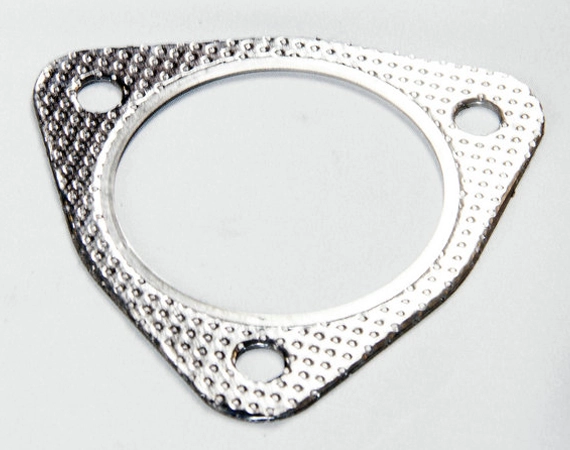
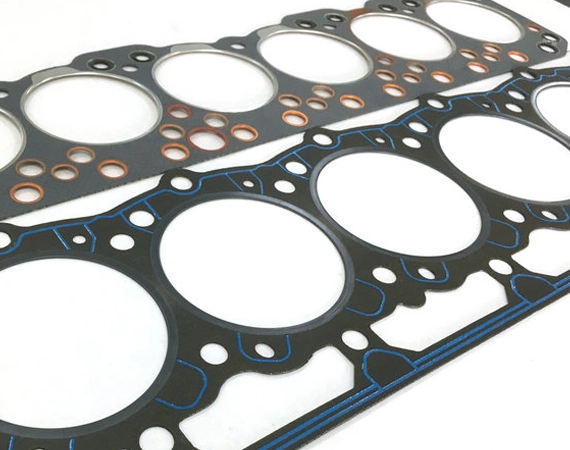
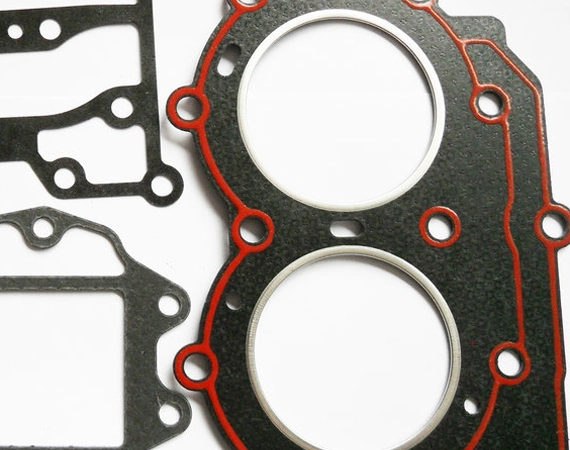
Non-asbestos Metal Composite Gaskets offer several advantages over paper gaskets. They have superior liquid medium resistance, extrusion resistance, and tensile resistance, making them suitable for most medium or high mechanical stress applications. Reinforced by a metal core, these gaskets have significantly improved temperature resistance. Like paper gaskets, they can also be easily reinforced by a silicone rubber sealing bead from the screen printing process.
Pressure Resistance: They are designed to withstand high pressure, ensuring a tight seal even under challenging conditions.
Chemical Resistance: Non-asbestos metal composite gaskets are resistant to a wide range of chemicals, preventing degradation and ensuring longevity.
Durability: The incorporation of metal provides additional strength, making these gaskets highly durable and long-lasting.
Versatility: They can be used in a wide range of applications, from engines and pipelines to machinery and equipment.
However, they may be more expensive than paper gaskets and may not be necessary for low-stress applications:
Good liquid medium resistance, superior extrusion resistance and tensile resistance.
Suitable for most medium or high mechanical stress applications.
Reinforced by the metal core, the temperature resistance has been significantly improved.
Easy to reinforced by silicone rubber sealing bead from screen printing process.
Rubber-Metal Gaskets: These combine a rubber sealing element (e.g., nitrile, EPDM, or silicone) with a metal core or reinforcement (e.g., steel or aluminum). The rubber provides flexibility and sealing, while the metal adds strength and stability.
Cork-Rubber Gaskets: Made by blending cork with rubber (natural or synthetic). The cork provides compressibility, while the rubber enhances durability and sealing.
Fiber-Reinforced Gaskets: These consist of a fibrous material (e.g., aramid, cellulose, or asbestos-free fibers) bonded with a rubber binder (e.g., NBR, SBR). The fibers provide structural integrity, while the binder ensures flexibility.
PTFE-Based Composite Gaskets: Combine polytetrafluoroethylene (PTFE) with fillers like glass, carbon, or silica to improve strength and reduce creep. PTFE offers excellent chemical resistance.
Graphite-Metal Gaskets: Made by laminating graphite layers with metal (e.g., stainless steel or tanged metal inserts). Graphite provides high-temperature resistance, while metal adds rigidity.
Mica-Based Gaskets: Combine mica (a heat-resistant mineral) with a binder or metal reinforcement. Mica offers excellent thermal stability.
Multi-Layer Steel (MLS) Gaskets: Consist of multiple thin layers of steel (often stainless) with embossed or coated sealing surfaces, sometimes including elastomeric or graphite layers.
Mica gaskets excel in high-temperature environments, withstanding up to 1000°C (1832°F), making them ideal for applications like exhaust systems and industrial furnaces. Their excellent chemical resistance ensures durability against acids, alkalis, and solvents, while their non-flammable nature enhances safety in fire-prone settings. With low thermal conductivity, they minimize heat transfer, and when reinforced with metal or binders, they offer good compressibility for reliable sealing on irregular surfaces. As an asbestos-free alternative, mica gaskets provide a safe, long-lasting solution with strong mechanical stability, reducing maintenance costs across industries like automotive, aerospace, and power generation.
 Tel/WhatsApp 0086-28-85875509
  export@teamful.net
 English
 Español
 русский
 português
 Türkçe
 فارسی
فارسی