In high-temperature industrial environments, selecting the right gasket material directly impacts system safety, performance, and longevity. Among the most widely used materials, mica gaskets and ceramic gaskets are often compared due to their ability to withstand extreme heat.
However, while both materials perform well under high temperatures, mica gasket material stands out for its balance of thermal stability, insulation, mechanical strength, and long-term reliability.
This guide provides a complete comparison of mica gasket vs ceramic gasket, helping engineers, procurement teams, and manufacturers make the right decision for demanding applications.
A mica gasket is made from natural mica minerals (typically phlogopite or muscovite), often reinforced with stainless steel for added strength.
High Temperature Resistance: Up to ~1000°C in continuous operation
Excellent Thermal Insulation: Low thermal conductivity prevents heat transfer
Electrical Insulation: Ideal for electrical and heating systems
Non-Flammable & Fire-Safe: Stable in oxygen-rich environments
Chemical Stability: Resistant to most acids, oils, and chemicals
Mechanical Strength: Reinforced designs resist pressure and deformation
Mica gasket material maintains consistent sealing performance under thermal cycling, meaning it can handle repeated heating and cooling without cracking or failing.
Compared to many alternatives, mica also shows slower performance degradation over time, extending equipment lifespan .
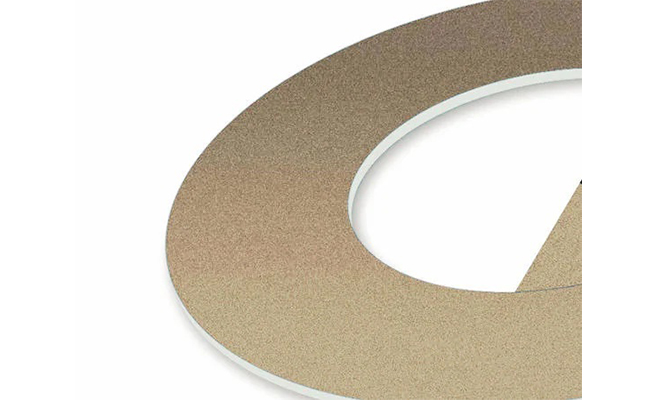
Ceramic gaskets are typically made from ceramic fibers (aluminosilicate) or dense ceramics such as alumina or zirconia.
Ultra-High Temperature Resistance: Up to 1260°C (fiber) or 1750°C (dense ceramic)
Excellent Chemical Inertness: Resistant to corrosion
Low Thermal Conductivity: Good insulation performance
High Thermal Shock Resistance: Especially for fiber-based types
Despite their high temperature capability, ceramic gaskets have notable drawbacks:
Lower mechanical strength (fiber types)
Brittleness (dense ceramics)
Handling sensitivity (fiber materials may degrade)
Higher cost in many applications
The real difference lies not just in temperature limits—but in overall performance, durability, and usability.
| Feature | Mica Gasket | Ceramic Gasket |
|---|---|---|
| Max Temperature | ~1000°C | 1260–1750°C |
| Thermal Conductivity | Very low | Very low |
| Mechanical Strength | High (reinforced) | Fiber: low / Dense: brittle |
| Flexibility | Moderate | Fiber: moderate / Dense: low |
| Electrical Insulation | Excellent | Good |
| Chemical Resistance | Excellent | Excellent |
| Durability | Long-term stable | Can degrade (fiber) |
| Cost Efficiency | Moderate | Moderate to high |
| Ease of Installation | Easy | More fragile |
Although ceramic gaskets can withstand higher peak temperatures, mica gaskets provide better overall performance in real-world industrial conditions.
Balanced Performance
Combines heat resistance, strength, and flexibility—unlike ceramic, which often sacrifices one for another.
Superior Electrical Insulation
Ideal for applications involving electrical systems or heating elements.
Better Mechanical Reliability
Reinforced mica gaskets resist compression and maintain sealing integrity under pressure.
Safer in Oxygen Environments
Unlike graphite, mica does not oxidize or burn at high temperatures
Longer Service Life
Slower degradation reduces maintenance and replacement frequency
Mica gaskets are widely used in:
Automotive exhaust systems
Boilers and heat exchangers
Power generation equipment
Electrical insulation systems
Industrial furnaces
They are particularly effective where heat + insulation + sealing are required simultaneously.
Ceramic gaskets are typically used in:
Ultra-high temperature furnaces
Aerospace applications
Kilns and refractory systems
These are environments where extreme temperature outweighs mechanical concerns.
Choose mica gasket material when your application requires:
High temperature (but below ~1000°C)
Electrical insulation
Long-term durability
Mechanical strength under pressure
Cost-effective reliability
Choose ceramic only when:
Temperature exceeds mica limits (>1200°C)
Mechanical flexibility is not required
Teamful Seal provides high-performance mica gaskets engineered for demanding industrial environments.
High temperature resistance up to 1000°C
Excellent electrical and thermal insulation
Strong mechanical performance with reinforced structure
Long service life (often 5–10 years in proper conditions)
Customizable shapes and sizes
Teamful’s mica gasket solutions are designed to deliver reliability, safety, and performance across a wide range of industries.
A mica gasket is a high-temperature sealing component made from mica mineral sheets, designed to prevent leakage while providing thermal and electrical insulation. It is widely used in industrial systems exposed to heat and pressure.
Mica gaskets should be chosen when applications require high heat resistance, electrical insulation, and long-term sealing reliability. They are especially suitable for engines, boilers, and electrical equipment.
Mica gaskets offer excellent heat resistance, strong insulation properties, and high durability. They also provide reliable sealing performance and longer service life compared to many alternative materials.
While both materials serve high-temperature applications, mica gaskets offer the best balance of performance, durability, and cost-effectiveness for most industrial use cases.
From thermal insulation to mechanical reliability, mica gasket material remains the preferred solution where consistent sealing performance is critical.
For engineers and buyers seeking a dependable high-temperature sealing solution, mica gaskets are not just an option—they are often the optimal choice.
 Tel/WhatsApp 0086-28-85875509
  export@teamful.net
 English
 Español
 русский
 português
 Türkçe
 فارسی
فارسی